What Sydney's UV Does To Car Paint, And What Actually Protects It
Sydney spends its summer in the extreme band of the UV index. Here is what that does to a clear coat over the years, what paint correction can bring back, and where a ceramic coating earns its keep.
The short version
- ARPANSA, the federal radiation agency, recommends sun protection whenever the UV index reaches 3. Sydney clears that bar on most days outside midwinter.
- In summer the Sydney index regularly reaches 11 and above, which is the extreme band of the scale.
- UV does not crack paint overnight. It slowly oxidises the clear coat, which reads first as dullness, then as chalkiness, and dark colours show it earliest.
- Oxidation that has already happened can usually be machine polished away. That is what paint correction is.
- A ceramic coating adds a hard, sacrificial layer over the clear coat, and ours are backed by a warranty.
The number on the weather app that matters for your car
The UV index is the one line on the forecast that most drivers skip past, and it’s the one that has the most to say about how a car ages here. The scale runs from low at 1 and 2, through moderate, high and very high, to extreme at 11 and above. ARPANSA, the Australian Radiation Protection and Nuclear Safety Agency, measures the index in real time in every capital city, and its advice is to protect skin whenever the reading is 3 or higher.
Sydney spends most of the year above that line. Through winter the index drops into the low band, around 2 to 3 in June and July, and then it climbs. By December and January the Cancer Council notes the index in Australian summer regularly sits in the extreme band, 11 and above on a clear day.
Skin gets sunscreen and a hat. A car parked on a Wahroonga driveway gets neither, and it sits there through every one of those extreme afternoons, year after year. The damage is slow enough that nobody sees it happen, which is exactly why it’s worth understanding.
What UV actually does to a clear coat
Modern car paint is a sandwich. A primer bonds to the metal, a thin colour layer carries the pigment, and over the top sits the clear coat, a transparent urethane layer that provides the gloss and takes the weather. The colour you paid for never touches sunlight directly. The clear coat does, every day.
Paint manufacturers blend UV absorbers into that clear layer for exactly this reason. Those absorbers sacrifice themselves over time. As they deplete, UV begins breaking the polymer bonds in the clear coat itself, a process called photodegradation. The surface stops being optically smooth, light stops reflecting cleanly, and the finish reads as dull.
Left longer, the surface of the clear coat turns chalky, a stage detailers call oxidation. Further again and the clear coat can fail outright, the cloudy white patches and peeling edges you see on bonnets and roofs of cars that have lived outside for a decade. At that point no polish can help, because there’s nothing left to polish. Everything before that point is recoverable.
The horizontal panels go first. Bonnet, roof and boot face the sky square on and collect the most radiation per day. If you want to know how a car has been kept, run your eye along the roofline in low light. That panel never lies.
Why dark cars around the North Shore show it first
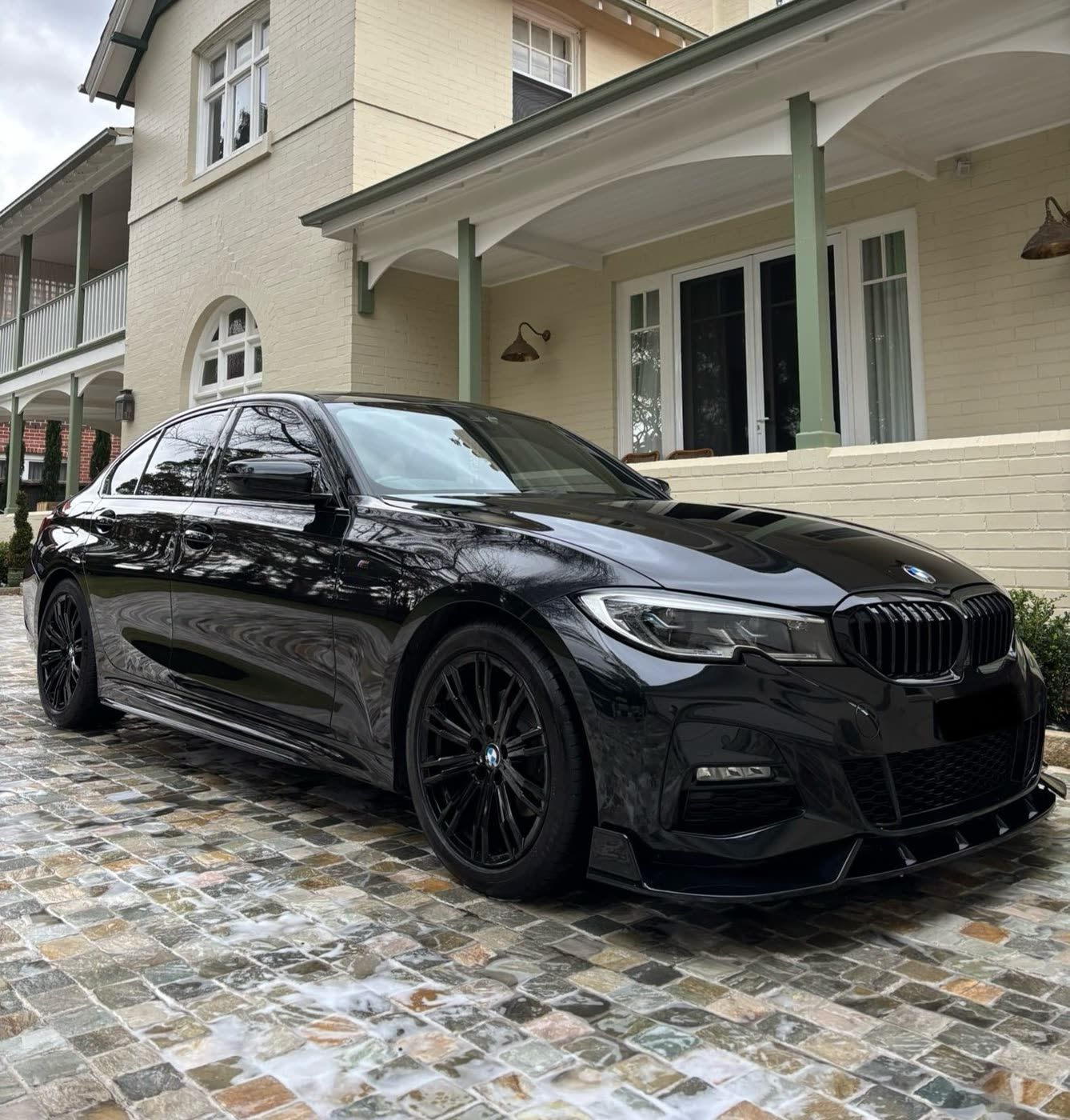
Dark paint doesn’t receive more UV than white paint, but it runs hotter in the sun, and heat accelerates every chemical process happening inside the clear coat. The combination of a black car and an uncovered driveway is the fastest route to a dull finish we see, and black and deep blue are everywhere in Wahroonga, Turramurra and St Ives.
Dark colours also show the result more. Oxidation scatters light, and scattered light reads as a grey haze. On a white car the haze hides. On a black car it’s the difference between a mirror and a chalkboard, and once you’ve seen a corrected black panel next to an uncorrected one, you can’t unsee it.
The leafy street tax
Ku-ring-gai's tree canopy brings its own additions. Sap, bird droppings and leaf tannins are all mildly acidic, and a surface already weakened by UV etches faster. A bird dropping left on a hot, oxidised bonnet for a week can mark the clear coat permanently. The same dropping on a coated, regularly washed car wipes off. The two problems feed each other, which is why protection and regular washing work better together than either does alone.
The inside of the car cops it too
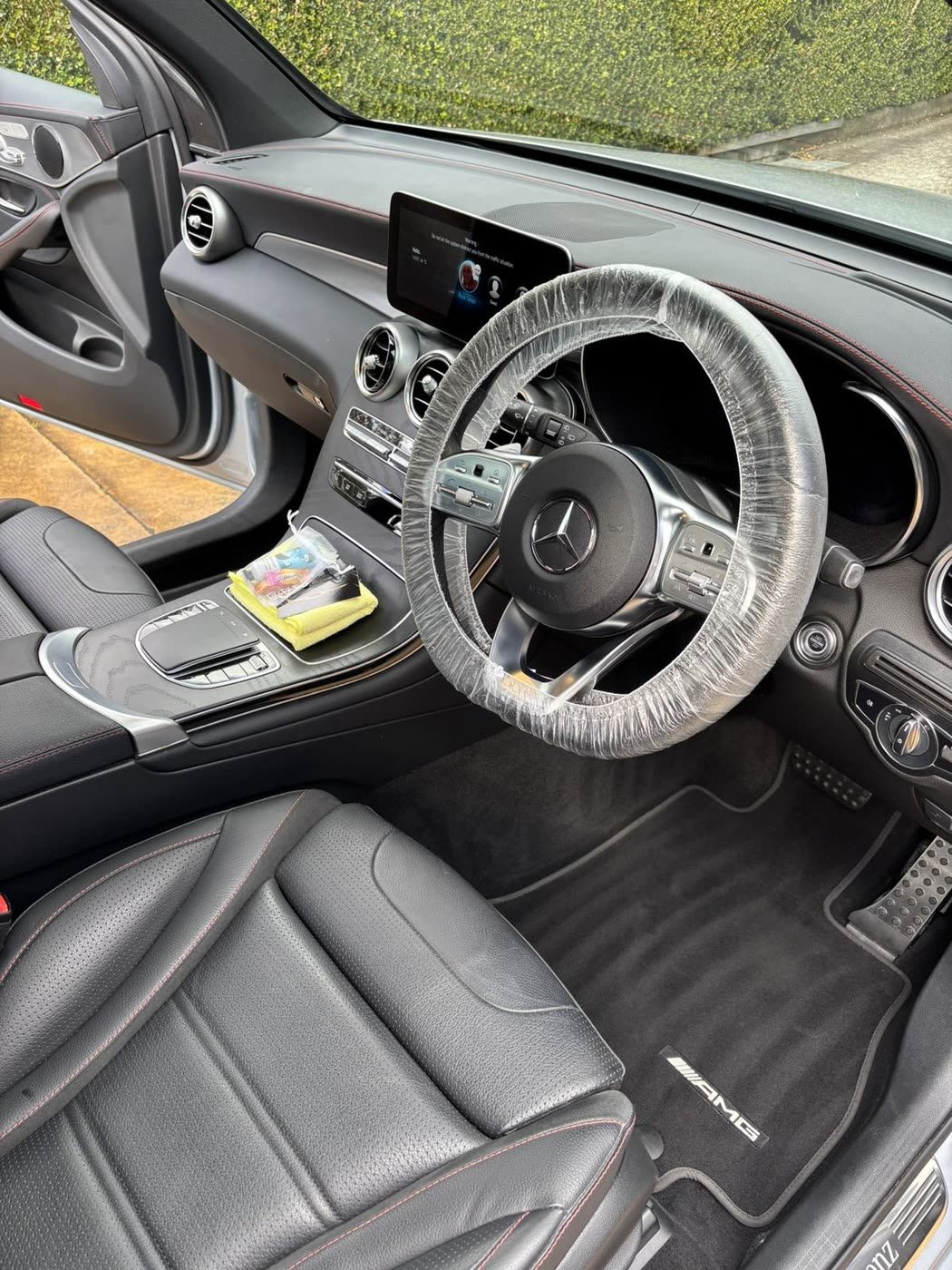
Glass filters some UV but not all of it, and a car's cabin is a greenhouse. Dash tops fade and crack, leather dries and loses its surface, and dark trim turns grey along the top of the door cards where the sun lands every commute.
The fix is less exotic than the damage. Interior surfaces that are cleaned and dressed regularly keep their plasticisers longer, and a windscreen sunshade on a car that lives outside is the cheapest paint protection money can buy, just pointed inward. A proper interior detail resets the surfaces; the habit keeps them.
What paint correction can and cannot bring back
This is the one I get asked about most, and it’s the one where people are most surprised by what’s still recoverable. Here’s the part that surprises people: most UV dullness isn’t permanent. Oxidation lives in the top few microns of the clear coat. Paint correction machine polishes that damaged layer away in controlled stages, exposing the healthy clear coat underneath, and the gloss that comes back is the car's own, not a product sitting on top.
The same process removes the swirl marks and light scratches that accumulate from years of quick washes, which scatter light the same way oxidation does. A corrected panel looks wetter and darker than it has since the car left the showroom, because the surface is finally smooth enough to reflect properly again.
The honest limits
Correction removes material, so it isn’t infinite. A clear coat can only be polished so many times in its life, and paint that has already failed, the chalky white patches with peeling edges, can’t be corrected because the layer itself is gone. That panel needs a spray painter, not a detailer, and we’ll tell you so at inspection rather than polish something that shouldn’t be polished.
This is also why correcting a car and then leaving it bare is half a job. You’ve removed the damaged layer and exposed fresh clear coat to the same sun that caused the problem. Correction answers what has happened. Protection answers what happens next.
What a ceramic coating actually is
A ceramic coating is a liquid polymer, usually based on silicon dioxide, that’s applied by hand and chemically bonds to the clear coat as it cures. It isn’t a wax that sits on the surface for a few weeks. It becomes a hard, measurable layer that takes the weather so the clear coat doesn’t have to.
For a car that lives outside in this city, that matters in three ways. The coating takes the UV exposure first, the way the factory absorbers were doing before they depleted. Its hardness resists the fine marring that washing puts into bare paint. And its hydrophobic surface means water beads and sheets off rather than drying into mineral spots, and contamination like sap and droppings release with far less effort.
We apply ceramic coatings after a full correction, because a coating locks in whatever is underneath it, good or bad. Coating over swirls preserves swirls.
What a coating is not
A coated car isn’t armour plated. It still gets dirty, it can still be scratched, and it still benefits from a proper wash routine. What changes is the rate of ageing and the ease of upkeep. Think of it as the difference between a sealed timber deck and a raw one. Both weather. One weathers at a fraction of the pace and cleans up with a fraction of the work.
What you can do between details
Shade is the single biggest lever and it’s free. A carport, a garage, even the shaded side of the house changes the daily UV dose the paint receives. If the car must live in the open, a fitted breathable cover does the same work, provided the paint is clean when it goes on.
Wash regularly and gently. The point is to remove the acidic contamination before it has time to work on a sun softened surface. Deal with bird droppings when you see them, not at the next wash, especially in summer when panel temperatures peak.
And have the paint inspected honestly every so often. Because we come to you across the North Shore and the Northern Beaches, that assessment happens on your own driveway, against your car's actual condition rather than a menu.
Where to start
So what are you waiting for? Give us a call or send through an e-mail with a photo or two and tell us how the car lives, garaged or outside. Quotes are free, and we’ll tell you honestly whether the right move is a detail, a correction or a coating. Let’s give it the love it deserves.
Thanks for reading!
Valentino